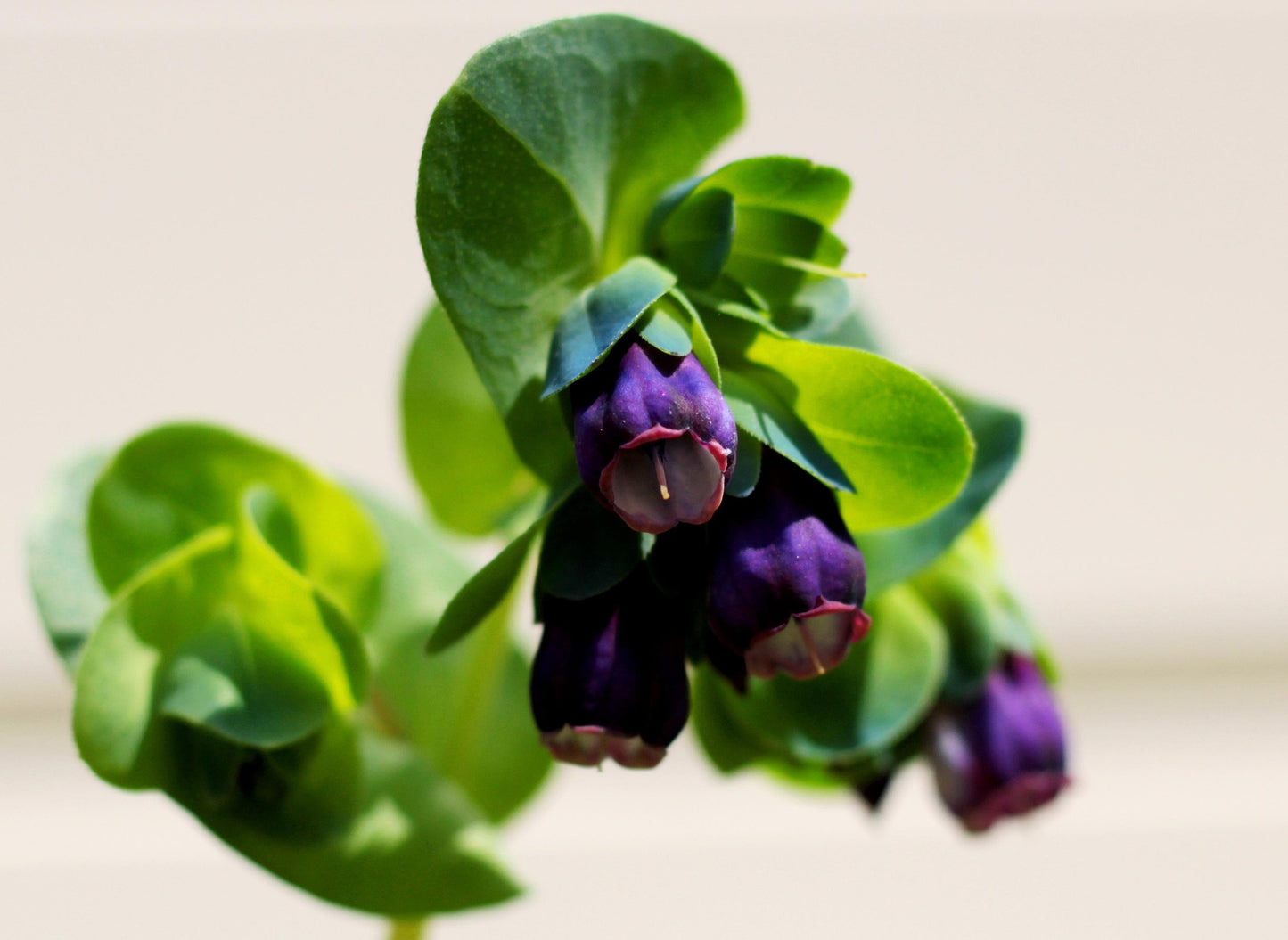
Cerinthe Major Purpurascens is one of those plants that always makes people stop and ask, "What's that?" Rich purple blue nodding flowers hang beneath deep blue green bracts on long, sturdy stems, creating a look that's unlike almost anything else in the garden. It's a superb cut flower too, and the bees absolutely love it! Flowers appear from July in the first year, then from May onwards in future years. A half hardy perennial, it's equally happy in containers, where it can be moved under cover during very cold snaps. 🌸 Flowering: May to September 📏 Height: to 60cm 🌿 Half hardy perennial, often grown as an annual SOW: Soak seeds overnight in tepid water to help seedlings break out of their tough casings. Sow in spring in pots or modules of seed compost, cover with 3 to 5 mm of vermiculite or perlite and keep at around 18°C. Germination usually takes 1 to 2 weeks. You can also sow outdoors in late spring once temperatures stay above 10°C, when germination takes around 2 to 3 weeks. Or sow in autumn for flowers early the following year. GROW: once seedlings are large enough to handle, pot them on and grow them until they're ready to harden off. Plant 30 to 40 cm apart in a sunny spot. Deadhead to keep the flowers coming! Cerinthe dies back below ground each autumn, then fresh shoots appear again in spring. Any self sown seedlings can be lifted and moved wherever you'd like them. ENJOY: flowers from July in the first year, then from May onwards in future years with a little winter protection. Brilliant for cutting and a favourite with bees! 📌USES Cut Flower • Cerinthe lasts at least a week in a vase. • Sear the stems and they'll often last up to 14 days. • To sear, dip the bottom 5 to 7 cm of freshly cut stems into boiling water for about 20 seconds. • Cut stems early in the morning for the longest vase life. Pollinator Friendly • Loved by bees and butterflies, bringing plenty of pollinators into your garden. • Recognised by the RHS as a valuable plant for supporting native British pollinators. Historical • this nectar rich plant is so loved by bees that in the past it was thought to be the main source of their honey, which is how it earned its old name, Honeywort. 🏡 In your garden • Ideal for city and courtyard gardens and happy in containers. • Perfect for wildlife, cottage, informal and cutting gardens. • Lovely in borders and beds. • Great for gravel gardens: drought resistant once it has rooted in well. • Happy in coastal gardens.


 Save
Save


