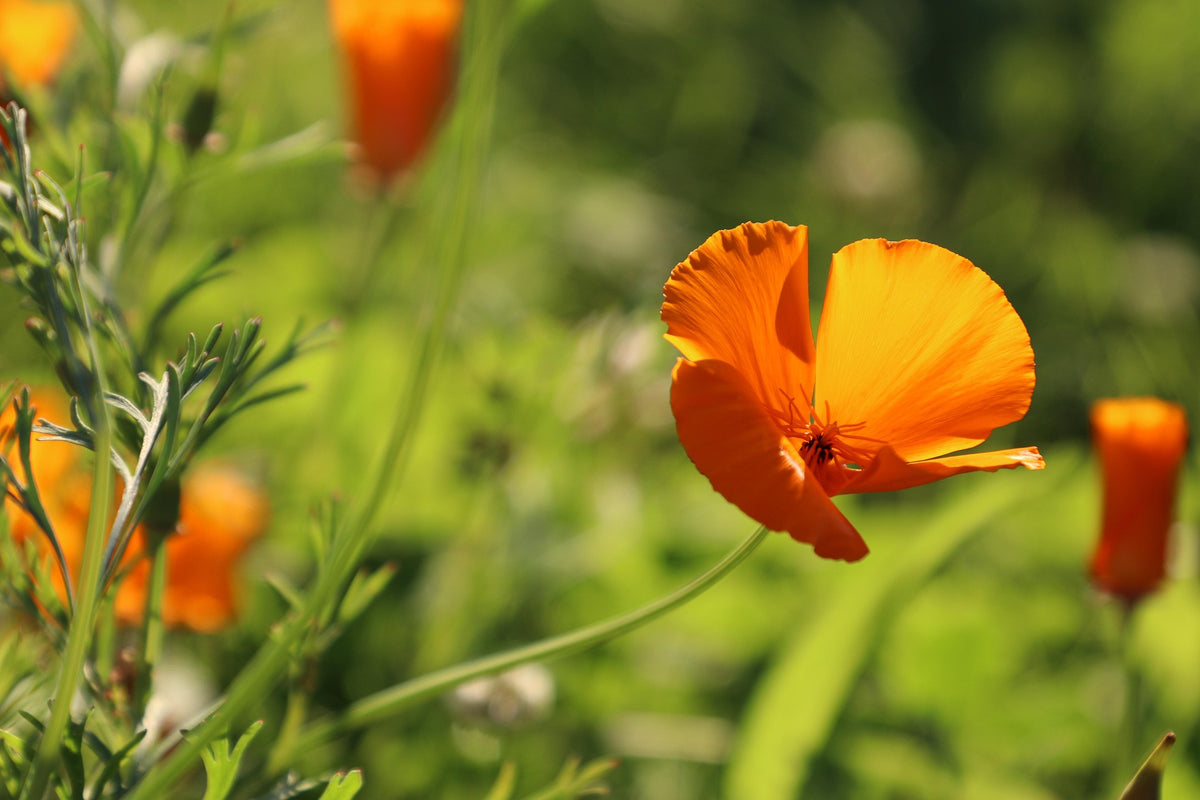
Eschscholzia Mikado glows with a vibrant orange centre that changes to hot-red on the petal edges. Delicate and dancing in the slightest breeze, these are fabulous to see dotted about or en masse. They draw in a wide range of insects to their supply of rich pollen.
🌸 Flowering: June to September
📏 Height: to 40cm
🌿 Short-lived perennial, often grown as an annual
💧 Drought tolerant once established
Sow: from mid-April (late March in a mild area) to May or August to October, where they are to flower, on open ground, barely covering the seeds. Germination takes 14-21 days. They like a well-drained site in a sunny position. You may need to thin them to about 15cm apart. They look lovely in the border or a more naturalised setting. Autumn sowings a mild area with well-drained soil do well.
Grow: the flowers stay tightly shut on cloudy days or at night. Sunlight is the key ingredient that opens them up for foraging insects. They thrive in poor, sandy or well-drained soils and handle dry conditions easily. Cut flowers regularly to encourage growth and to keep them flowering for longer. Deadhead if you do not want them to self-seed.
Enjoy: it’s those dancing colours that draw me back to these time and time again. I pop them in amongst those green veggies that sit in the garden for ages: the broccoli, cabbages and cauliflowers look so much more enticing for a splash of colour.
🏡 In your garden
• Cottage and informal gardens
• Coastal plots
• Gravel and rock gardens
• Pollinator plantings
• Flower borders and beds
• Dotted amongst veggies to help attract pollinators
✂️ Cut flower
• They also make a very pretty, but short-lasting, cut flower
• If you briefly sear the ends of the stems in boiling water then they will last a little longer
• Fresh vase life of up to 5 days
🐝 Pollinator friendly
• RHS Plants for Pollinators recommended
• Loved by bees and many other pollinating insects
🐞 Wildlife friendly
• Attracts hoverflies; the larvae of many species are useful aphid predators to have around the veg plot.
🎨 Natural dye plant
• The flowers can be used for natural dyeing
• Produces soft yellow to golden tones
• For cotton, linen or hemp fabrics, the best results come from pre-treating the fabric with a tannin source (like gallnut extract) and then using alum or aluminium acetate.


 Save
Save


