Woad (Isatis tinctoria) is the plant behind one of the most extraordinary colours you can grow. Its blue-green leaves contain the natural compounds that create its famous blue dye. Easy to grow and remarkably productive, Woad gives you plenty to experiment with before it puts on a completely different show in its second year.
🌸 Flowering: May to August
📏 Height: up to 1.2m in flower
🌿 Biennial
💧 Drought tolerant once established
Sow: from March to April or August to September. Sow thinly into shallow drills, lightly cover with soil and water well, then thin seedlings to about 30cm apart. Alternatively sow into modules and plant out while still small, taking care not to disturb the developing taproot. Spring sowings establish during their first summer, while late summer sowings form small rosettes before winter for an earlier start the following year.
Grow: in full sun in well-drained soil. Woad will tolerate poorer conditions, but fertile soil encourages plenty of leafy growth and gives you more material to play with. Keep young plants free from competition while they establish. Harvest the mature outer leaves through summer, leaving the centre intact to regrow for further pickings. As Woad belongs to the cabbage family, avoid growing it where other brassicas have recently been grown if club root is a problem in your garden.
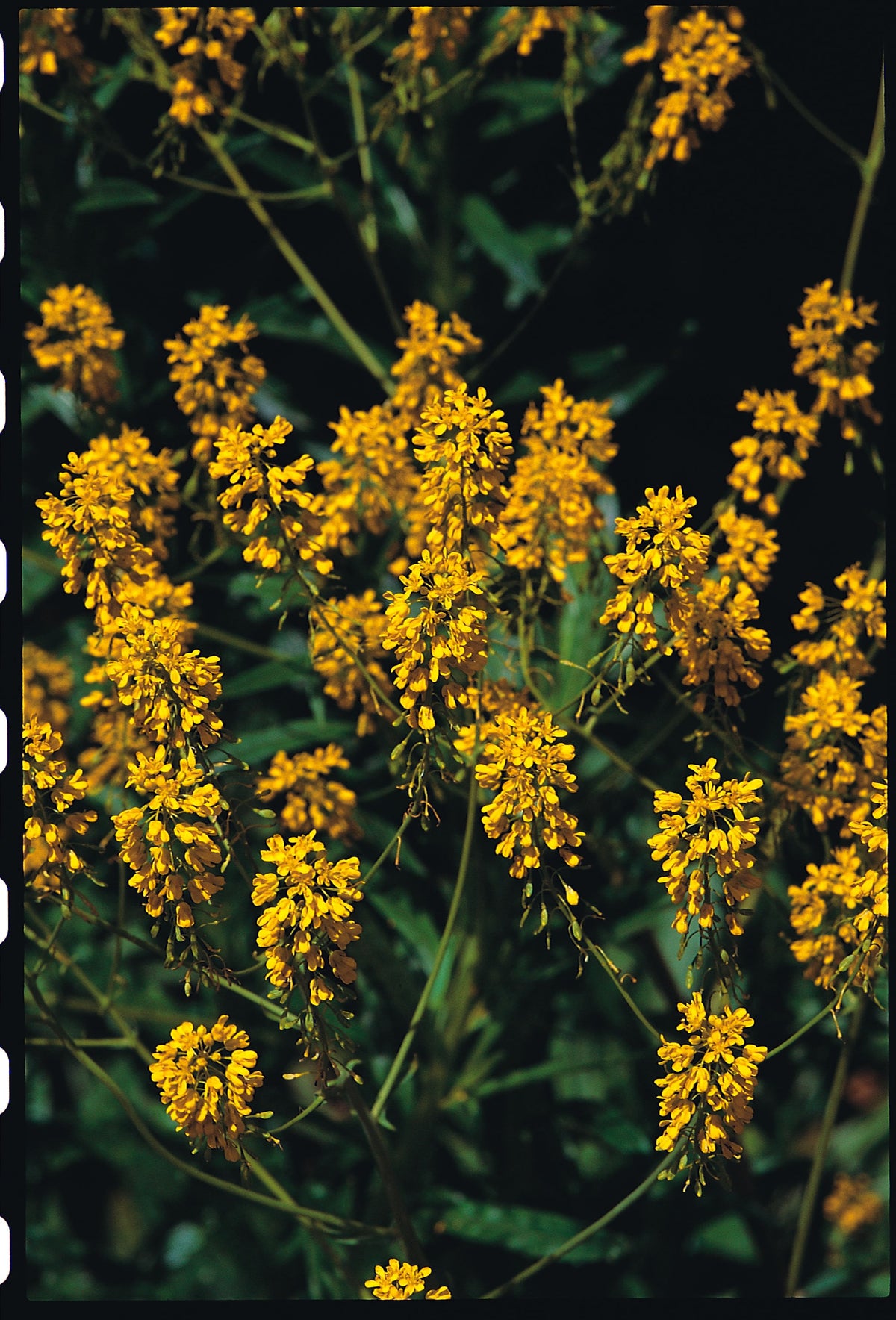
Enjoy: Woad is a plant of two halves. In its first year it grows as a handsome blue-green rosette, giving you harvest after harvest of dye leaves through the summer. Leave a plant into its second year and it sends up tall stems covered in clouds of small yellow flowers, followed by striking blue-black seed heads that look wonderful dried.
🎨 Natural dye plant
• Grow your Woad → harvest some leaves → prepare a cotton T-shirt → bash the living daylights out of it → end up with something you've actually made.
• Woad is grown for its leaves. They don't actually contain blue pigment, but natural compounds that can be extracted and converted into the famous Woad blue.
• You can usually take three or four harvests through summer. For the strongest colour, harvest after a spell of warm, sunny weather and use the leaves as soon as possible.
• A word about blue fingers! Wear gloves when harvesting and handling Woad leaves, and an apron when you're dyeing. Woad is very good at staining things, which is rather the point, but considerably less entertaining when the thing it has dyed blue is you or your clothes.
• There is more than one way to get colour from Woad. Leaf bashing is the simplest and gives greens, blues and turquoises. Salt extraction uses fresh leaves and salt to produce teal greens to teal blues. A dye pot is the most involved and unpredictable method, but it's the route to the strongest Woad blues.
🔨 And now for the Leaf bashing
This is the simplest, and certainly the most energetic, way to start experimenting with Woad!
• Prepare your fabric first. For cotton, linen or hemp, use a tannin bath followed by an alum mordant.
• You'll need fresh Woad leaves, a rubber mallet and some cardboard to protect the surface underneath. A hammer isn't ideal unless holes in your T-shirt are part of the plan!
• Turn the T-shirt inside out and lay it on the cardboard. Place fresh Woad leaves between the front and back so you've made a T-shirt sandwich, then start bashing. Keep going until the colour begins to show through the fabric. It's surprisingly good for getting rid of a bit of repressed angst too!
• Turn the T-shirt right side out and hang it in the shade, leaving the bashed leaves attached. Over the next couple of hours the colours oxidise in the air and you will see shades of green, blue and turquoise developing.
• Don't be tempted to iron or rinse while it's still damp. Leave the T-shirt to dry completely, then brush away the leaf debris. Once it has been dry for 24 hours, iron it before gently washing. Leave to dry again.
🏡 In your garden
• Cottage and informal gardens
• Prairie planting
• Wildlife gardens
• Flower borders and beds
• Pollinator plantings
• Dyers gardens
🐝 Pollinator friendly
The yellow flowers provide pollen and nectar for bees and other visiting pollinators
💡 Did you know?
Woad isn't only about dyeing fabric. Extracts from the plant have also found their way into wood treatments and protective coatings.


 Save
Save Sold out


