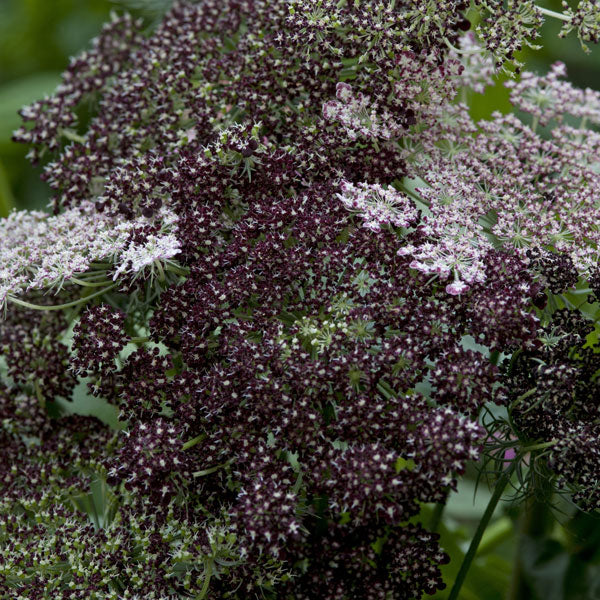
Daucus Dara is very attractive to bees, butterflies and other pollinators who enjoy the open, airy flower heads. The blooms come in shades from the palest pink to deep purple held above soft, feathery foliage. They also make very good cut flowers. Also known as False Queen Anne’s Lace, this is a purely decorative member of the carrot family. This variety has been featured at the Chelsea flower show and is a wonderful addition to any garden
🌸 Flowering: July to September 📏 Height: to 120cm 🌿Biennial
Sow: from March to May, or in the autumn. Seed dormancy is broken by a cold period so autumn sowing or early spring sowing gives the best results. Germination is good. The tiny seedlings can look like grass at first but soon develop distinctive leaves. They are best sown where they are to flower. Rake the soil to a fine tilth before sowing at 1.5mm deep (cover lightly).Germination takes 2 to 3 weeks, longer in the late autumn. Sow near the beginning of the year under glass or cloches for an earlier start to flowering.
Grow: watch out as the first growth resembles grass, but the next leaves makes identification clearer. This biennial normally forms a rosette of leaves in the first year and produces a flowering stem in the second, although some plants may bloom in their first year. After flowering, the flowerhead folds inward to develop a concave seedhead that resembles a birds nest. This remains throughout winter. The seeds will feed birds and will self sow for future plants.
Enjoy: wonderful as a cut flower. Left in the garden, the airy flower heads & ferny foliage create a drift of hazy colour through the summer, especially when combined with architectural plants such as Cerinthe or Bells of Ireland. Very attractive to bees, hoverflies, butterflies and many other pollinators. Perfect for…wildlife gardens, cottage gardens and informal planting.


 Save
Save Sold out


