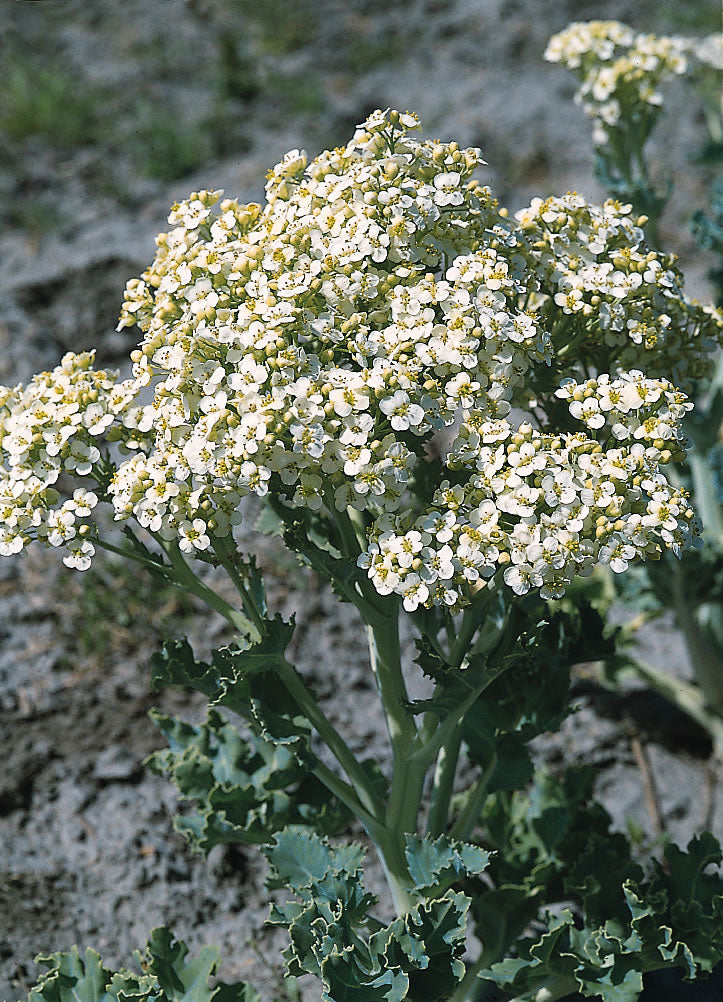
Seakale Crambe maritima is one of the earliest veggies, the purple shoots can appear from late February. The natural is in shingle and sand in coastal areas, grow in well-drained soil in full sun without waterlogging in the winter and you will have a perennial crop for many years. Harvest the young shoots in spring to eat raw or steamed – they taste like asparagus. Once the plants are established they can be forced for an even sweeter crop. Seakale also brings in an ornamental punch to your plot with a summer flowering flush of honey scented blooms that will encourage pollinators to your plot.
SOW: the seeds have a strong outer layer that allows them to float at sea for several years so germination can be a little slow! Soak the seeds for 24 hours before sowing 2cm deep in trays or pots of moist compost in spring and be patient.
GROW: when large enough to handle plant into deep tubs using a 3:2:1 mixture of potting compost, sharp sand and pea shingle or plant out at out 45-60cm apart. Seakale is a close relative to Brassicas. Grow as you would cabbage, clearing up any dead or damaged foliage as you go. They die back in the winter, bringing a tub into the warmth at anytime in winter triggers growth. Plants can be forced from their third year of growing – cover with a forcer, a black bucket or a box of straw. More information about forcing is on our seed label
ENJOY: young leaves & flower heads can be eaten raw in salads, as can blanched shoots (considered a delicacy). The shoots and leaf midribs can be cooked and served as an alternative to asparagus.
The perfect plant for… coastal and exposed gardens, gravel gardens, wildlife areas, for cut flowers, in borders and beds and in vegetable plots. These will thrive where other plants don’t as long as they have excellent drainage.
Historical notes… sea kale grows wild along the coasts of the Atlantic Ocean, the North Sea, the Baltic Sea, and the Black Sea. Archaeological evidence shows it has been eaten for 8000 years. From Roman times it was used to prevent scurvy, it has a high vitamin C content, and earned the name ‘scurvy grass’. In Britian it was first written about in 1799 and its popularity only declined in the 1900s largely because the plant's perishable nature, it’s unsuitable for modern food supply chains so the solution is to grow your own.


 Save
Save Sold out


