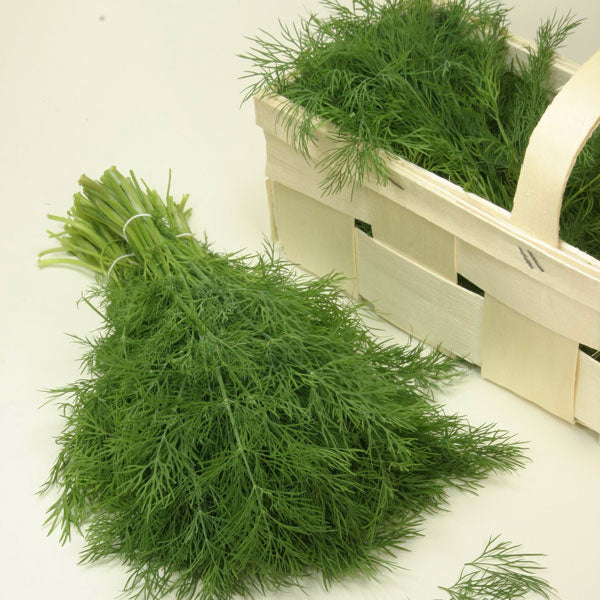
Dill is an ancient herb, this variety, Hera, is a top culinary choice. Plants grow to around 40 to 60cm tall with upright, feathery foliage in an attractive bluey-green shade. Hera is slow to flower giving you a longer harvesting window for fresh leaves. When it does flower, it becomes a magnet for bees and other pollinators and also attracts ladybirds. Once it sets seed, those too are a useful and flavourful addition to the kitchen.
This variety is part of our naturally nurtured range, the seed comes from an organic source.
🌱 Seasonal Growing Guide
SPRING: sow in pots or plug trays (avoid seed trays), cover with perlite. Plant out when large enough, after danger of frost has passed. Space your plants at about 20-30cm apart. Hera is quick growing & can give you tasty leaves in as little as 9-10 weeks.
SUMMER: pinch out to prevent flowering and harvest leaves, keep watered in dry weather
AUTUMN: harvest seeds as they dry and dig up remaining plants.
📌USES
GREAT FOR WILDLIFE
• Bees and other pollinators are attracted by the flowers
• Ladybirds are attracted by Dill
• The caterpillars that will eventually turn into Swallowtail butterflies love munching on bolting dill
EDIBLE
• Both the leaves and seeds are edible and can be used to make Dill tea.
• Seeds can be strongly flavoured & fragrant. Grind and use over honey-roasted carrots and parsnips, quiche and lentils and chickpeas. On the sweeter side try them with caramelised apples or on stewed apples or a crumble.
• Dill leaves have a lighter, fresher flavour. Best known with but also lovely in salads, salad dressings and dips such as tzatziki or stirred into natural yoghurt. Use with borscht or scatter over chicken or vegetable skewers.
• Freeze Dill on the stem. When needed, snip some off and return the rest to the freezer.
IN THE GARDEN
• Add leafy height and texture in a sunny herb garden.
• Ideal for growing in containers where you can brush past and enjoy the scent.
• A valuable plant for encouraging beneficial insects.
HISTORICAL
• Anethum graveolens has a very long history of use.
• In ancient Rome, dill was included in wreaths to honour Bacchus. It also showed up in their herbal remedies as well. They added dill leaves to cheese, soups, meats, and peas.
• The name is thought to come from an old Norse or Saxon word “dylla,” meaning to lull or soothe. It was traditionally used to calm crying babies and treat colic.
• During medieval times, dill was considered a protective plant against witchcraft and also appeared in love potions.
MEDICINAL: Please Note: we do not promote the medicinal use of plants – guidance and information should be sought elsewhere. Always seek professional medical advice and consult trusted sources for health-related guidance.
• Dill extract is sometimes infused in anti-aging skincare formulas.
• Traditionally associated with digestive comfort and relaxation
• Historically used for colic, cramps and stress related digestion.
• Some believe it may aid concentration and memory
• Dill has been noted in studies for antibacterial and antifungal properties
• A natural source of vitamin C, B vitamins, flavonoids and tannins


 Save
Save Sold out


